PETS GONE WILD

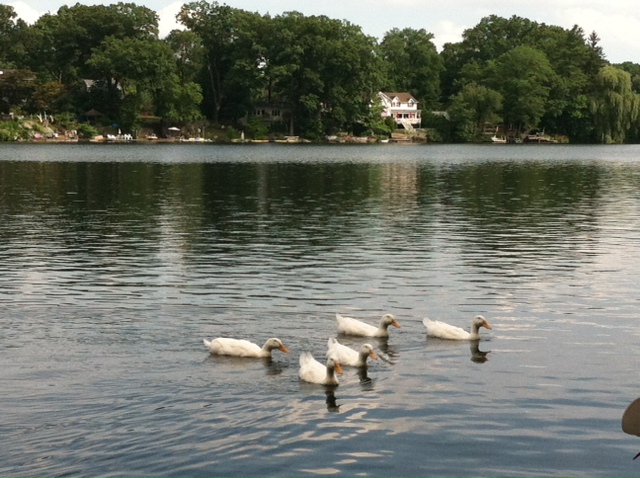
ImageThe best I can figure is an unknown person probably bought some adorable, fluffy, yellow ducklings for Easter and then when the birds grew bigger, ornery and started pooping all over the yard, the owners snuck into our hamlet under the cover of darkness and released them into the lake.  They probably thought it was a match made in heaven. Unfortunately unwanted Easter ducklings tend to end up in trouble. Our resident mallards seem to have sent out a “stay away” vibe because the domestic ducks keep their distance. The white ducks have become a recent topic of concern.

“They’ll become hawk food,” a neighbor stated. “When the lake freezes, that is.”

“They can withstand cold temperatures,” I said.

“They can’t fly,” the neighbor said. “One of them has already been taken down by a snapping turtle. There used to be six now there’s only five.”

“Really?” I exclaimed.

“Really. A lady went to the duck’s rescue and was able to wrench it free from the snapper but by the time she reached the vet it was too late.”

“She fought off a snapper?” I asked. “Was she hurt?”

“A little.”

“Someone can build a hut,” another person suggested.

Good luck getting them in it, I thought. These ducks don’t want anything to do with humans and I don’t think they would abide by being domesticated again. As much as I love ducks I don’t want them as pets. Let alone pets that are “sitting ducks,” so to speak. Maybe the ducks will have a change of heart when the temperature dips.Image
“Well someone ought to do something or we’ll be digging duck graves.”

The conversation reminded me of years earlier, when we had decided to vacation on Cape Cod for a month and had to bring our pet rabbit with us since no one wanted to take care of it. Who could blame them? We set up an area for the rabbit in the basement of the rented house in part because keeping him in the yard made him raccoon fodder. On our last day on the Cape, as we were packing the car, Robert came upstairs with a solemn face explaining that Violet the rabbit had died.

“Died?”

“Dead.”

“Dead?”

He nodded. “What are we going to do?”

“Bury it,” I said.

“You can’t just bury an animal.”

“Why not? You did that a lot when you were a kid.”

He shook his head. “Well for one thing I buried lizards and hamsters for Christ’s sake.”

“So.”

“And for another thing this isn’t our yard. Don’t you think the owners will be suspicious of a fresh pile of dirt on their lawn?”

I thought about how to disguise the mound.  

“I also think it’s a health hazard,” he said, as he phoned the only local veterinarian and asked what to do.

I was nervous because it was the end of our vacation and we were low on funds.

“Uh huh…Oh…uh huh…I see…well, okay then,” he said. “Just a minute, I’ll check.”

There was a brief pause as Rob cupped the phone receiver and turned to me. “Well, for three hundred dollars we can have a private cremation and funeral, and for two hundred dollars we can have a private cremation and remains in an urn.”

“That’s it?”

“Well for thirty dollars we can only get a mass cremation and no remains.”

“Robert!” I screeched.

He uncapped his hand. “Uh, we’ll take the thirty dollar one.”

Which in the end is what we did just before driving back to New York petless.  At least the rabbit didn’t die in the hands of a hungry raccoon. In our defense we didn’t buy him for Easter and he was our pet for over seven years. And call me heartless, but I don’t think I would have tried to wrestle a snapping turtle for a duck, even a nice white domestic one. I tend to give snapping turtles a wide berth.

This afternoon I was sitting on the dock after an end of summer swim and a hawk swooped down in front of me and snatched a pretty big fish out of the water. It was precision timing and the normally fast moving fish didn’t have a chance.  What kind of chance do five fat, displaced, white ducks have on a field of black ice with hawks circling overhead? I feel for my feathered friends but I’m not getting involved in that one either. I just wish people would stop trying to make their children so damn happy at Easter.


*Easter bunny horror stories: Resist the urge to give rabbits, ducks, chicks


BORROWED LANDSCAPES

ImageI try to choose homes with a view. Our first apartment in Windsor Terrace, Brooklyn was on the top floor of a third floor walkup. During the 1985 centennial celebration of the Statue of Liberty we hosted a roof-top party with a clear line view of New York Harbor. Our friends ate, drank and danced to fireworks but what they really talked about was the view. 

Then we moved out to the North Fork of Suffolk County and we had to walk around the corner to the view. The Long Island Sound stretched out endlessly from the tops of enormous beach boulders. The winter was cold and lonely for newlyweds who missed city life but the view of the Sound helped sustain us that entire year. I still miss it.

            Our next apartment was a dump in Yonkers in a crummy neighborhood where I made the mistake of staring at a neighbor’s Mohawk haircut a few seconds too long. The girl shouted out every time she saw me.

“Hey lady, what’re you staring at?”

It worsened when the girl stared calling out to Rob.

“Hey, man what is your wife staring at?”

“There really is no good answer to that question,” Rob said.

 For obvious reasons we only lived there a year as well but the backdoor faced out into an expansive valley with colorful houses that dotted the landscape. I could sit on the back staircase free to watch the sunset each night with no thought of seeing “the girl.”

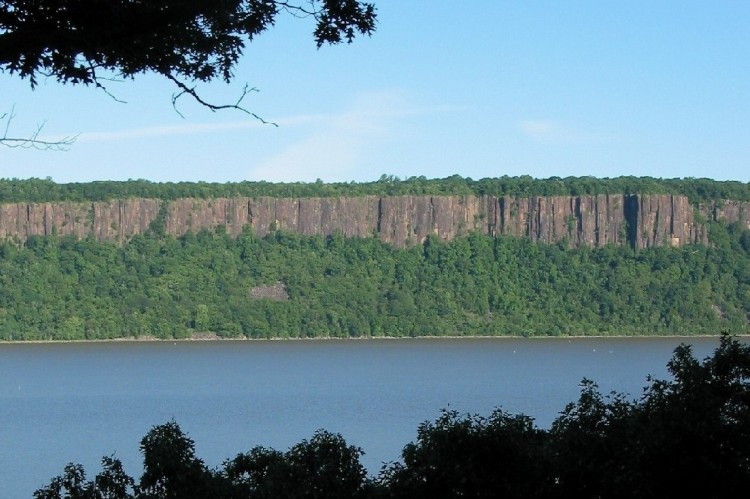
We moved to Hastings-on Hudson and for nine years we gazed at the Palisades out two picture windows. I used to stand in a darkened kitchen in the middle of the night and watch the flashing green lights on the passing barges. It didn’t matter if it was a blizzard, you would find the slow, steady chug of the barges as a source of comfort.Image

In 1997 we moved to White Plains and lived on the top floor of a house that was built on the highest point of land in the entire city. From our veranda we had a line of site view of the World Trade Center Towers. We bought our lake house and moved away before they came down and I’m glad we weren’t there anymore to be constantly reminded. Because when you have something in your daily view you start to feel like it belongs to you. The Japanese refer to this as a “borrowed landscape.”

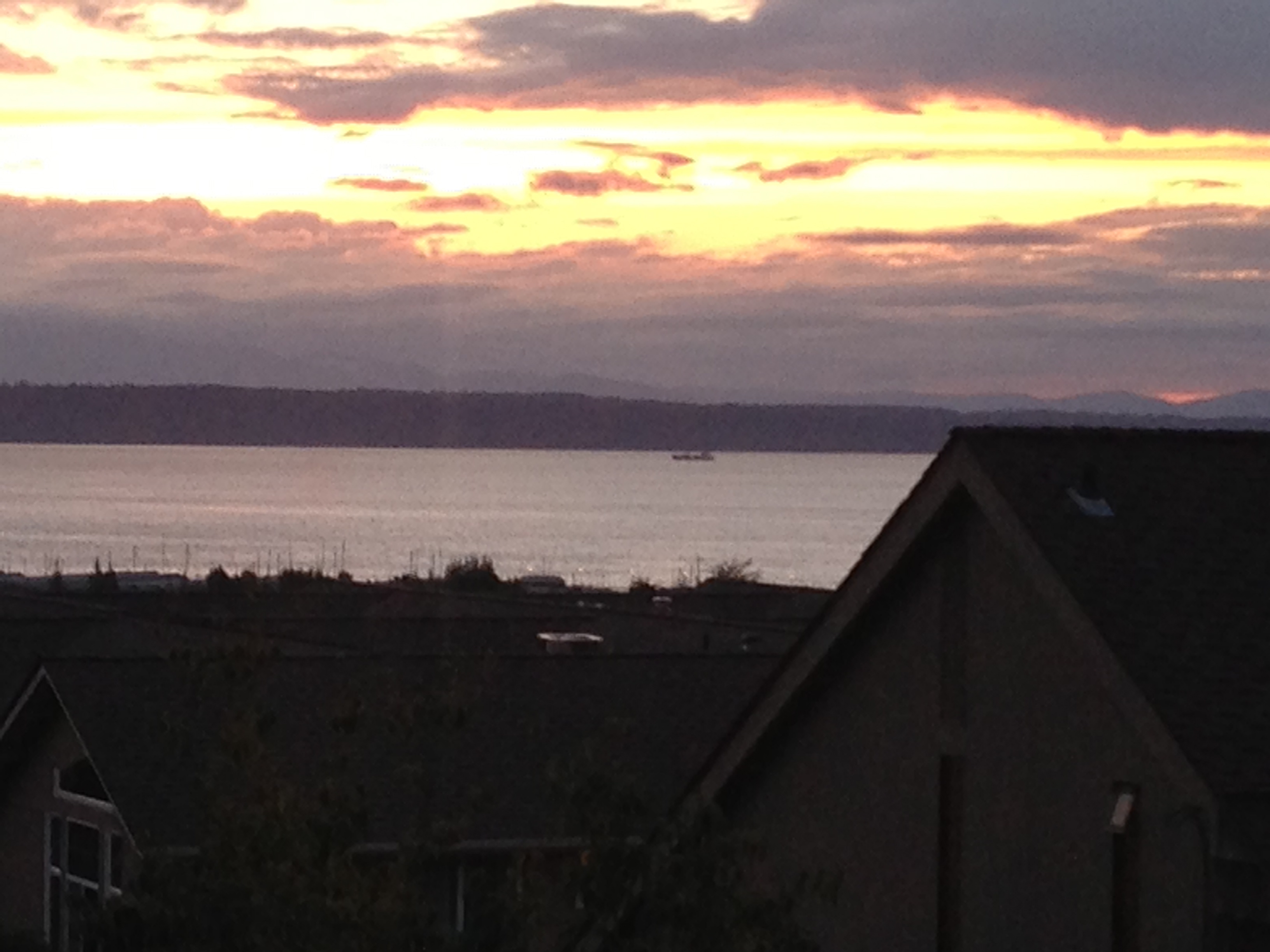
The best way to appreciate a borrowed landscape is to leave it. Once you return the relationship strengthens. We recently returned from a trip to Seattle to visit my brother and his wife. Their beautiful house rests on the top of Sixth Avenue in Edmonds, Washington with a partial view of the Puget Sound.

“Wow, what a great view, “ I noted.

“It is,” my bother agreed. “But if we could tear that house down it would be an even better view.”

Image

View from Chris and Sonia’s House

The point was hard to argue except everybody blocks someone, somewhere. But their view still boasted a daily surveillance of the Kingston Ferry traveling back and forth and the sun setting over the Puget Lowland, hard to beat. While I was there I found myself taking some ownership of their view and I started to miss my own so I knew it was time to leave. Traveling provides views of every variety and most of them aren’t meant to last, which is why we buy postcards and take photographs. Even stationary views are altered by light and shadow. Our most impressive view was of Mt. Rainier at sunset that Rob took from the airplane window as we began our descent into Seattle. It isn’t one anyone is likely to see again anytime soon. Image

NUTTIN HONEY

ImageThere’s a moment, in late spring, when the blossoms are falling off the trees and the light green leaves have burst forth from every branch. This is the longest point in time when you can enjoy the benefits of the cool shade that the leaves provide without thinking about raking. The variety of greens enhances the borrowed landscape of the lake that stretches beyond their branches. This is the moment when all of the benefits of the trees outweigh any downside.

Then sometime in late July a familiar “plink” hits the wood deck floor. Initially, you pretend you didn’t hear a thing. Occasionally someone will look up from his or her book and say something like,

“Did you hear that?”

“What?”

“Oh, nothing. My mistake.”

You return to your day. What else can you do? What chance do you have?

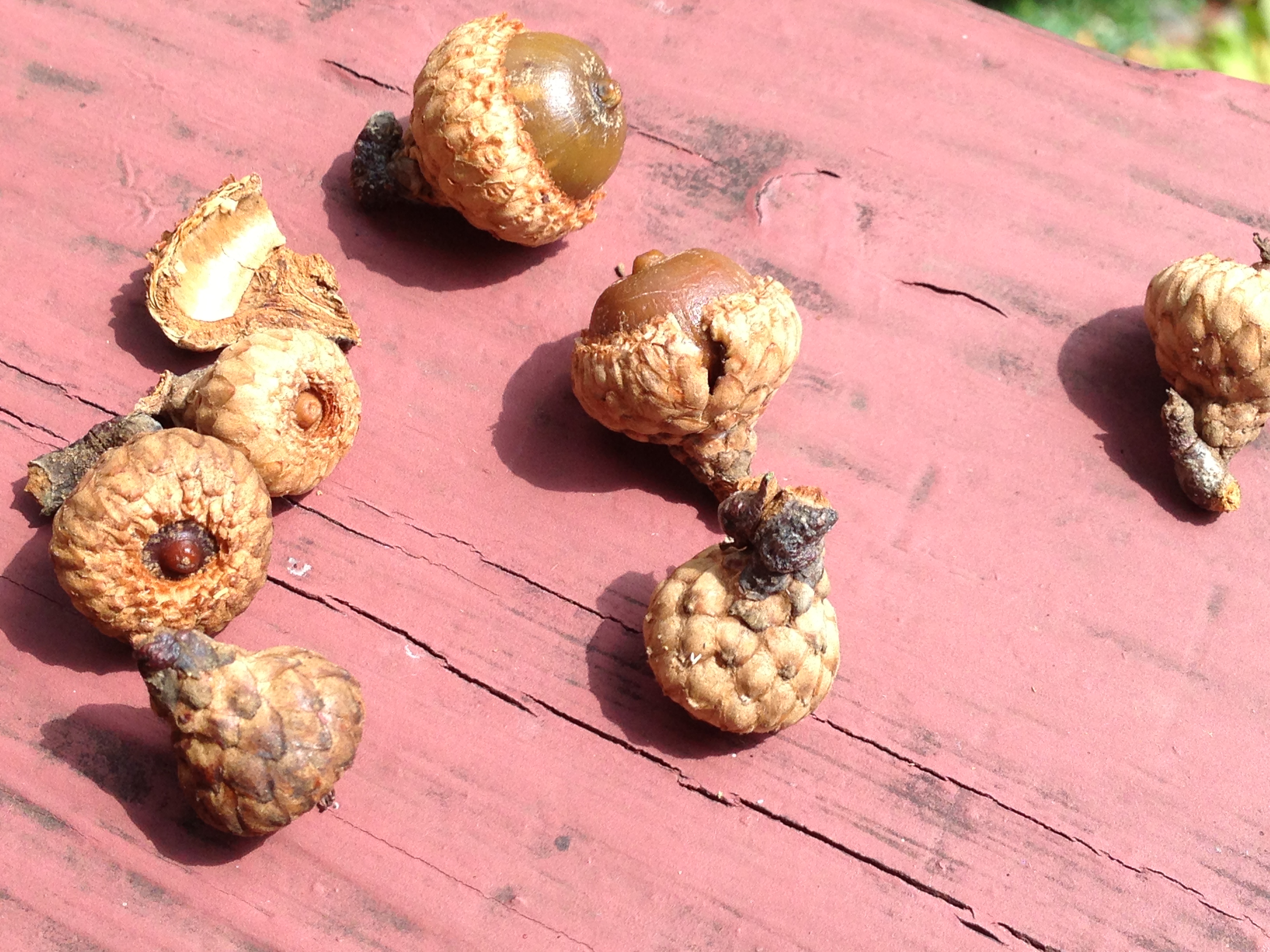
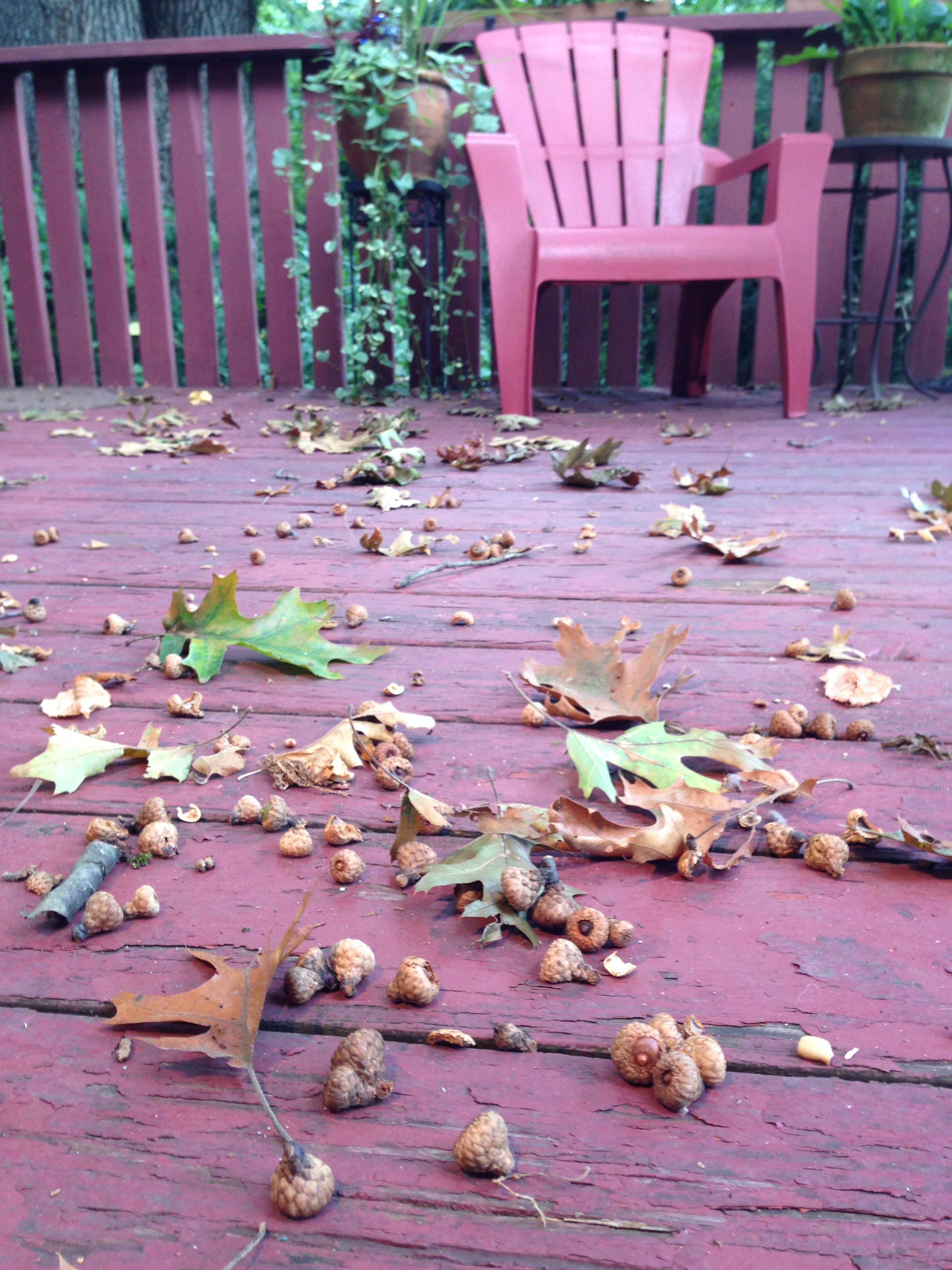
The oak trees are by far the worst offenders. It happens maybe once in a day, then several times a day until by the second week in August you have to make sure you’re positioned under a deck umbrella for protection. The first rounds of falling acorns are usually small and green and they fall from the sky like large raindrops. Then the squirrels begin their seasonal pillaging. They break open the nuts with reckless abandon and toss the shells overboard. Additionally there’s a barrage of sharp edged beechnut seeds that litter our path. Gone are the lazy summer days when you might step out on the deck in bare feet. You can’t even wear flip-flops: thick-soled shoes only, please! There is no safe place.Image

The first year we moved in I was driving around the lake and something dropped from the sky and smashed a hole in my windshield.

“I thought it was a bullet!” I exclaimed to Rob.

He examined the extensive damage. “It looks like a rock hit you.”

“Then a rock fell from the sky!”

“It was a black walnut,” our son explained.

I shook my head. “This was green.”

“Did it look like a small tennis ball?”

I nodded.

“That’s a young black walnut,” he said, raising his hands up as if it was difficult to talk nuts with such amateurs.

The large encased nuts became a sport to my daughter and me. We drew an imaginary line down the one-way street and kicked the nuts back and forth to motivate us to run faster until the outer green shell broke apart or the nut rolled out of range into a patch of poison ivy. Once the black walnut season was over it was difficult to prod my daughter out for exercise. Nuts can have that affect on people.

It isn’t like you have any real control over trees, aside from cutting them down and that feels cowardly. It just seems that each nut is a potential tree and we already have enough.

On a last note, I found this great website, Acorns: The Inside Story, which writes about all the wonderful things you can do with acorns including eating them—go figure.

SATAN ZERO, US ONE

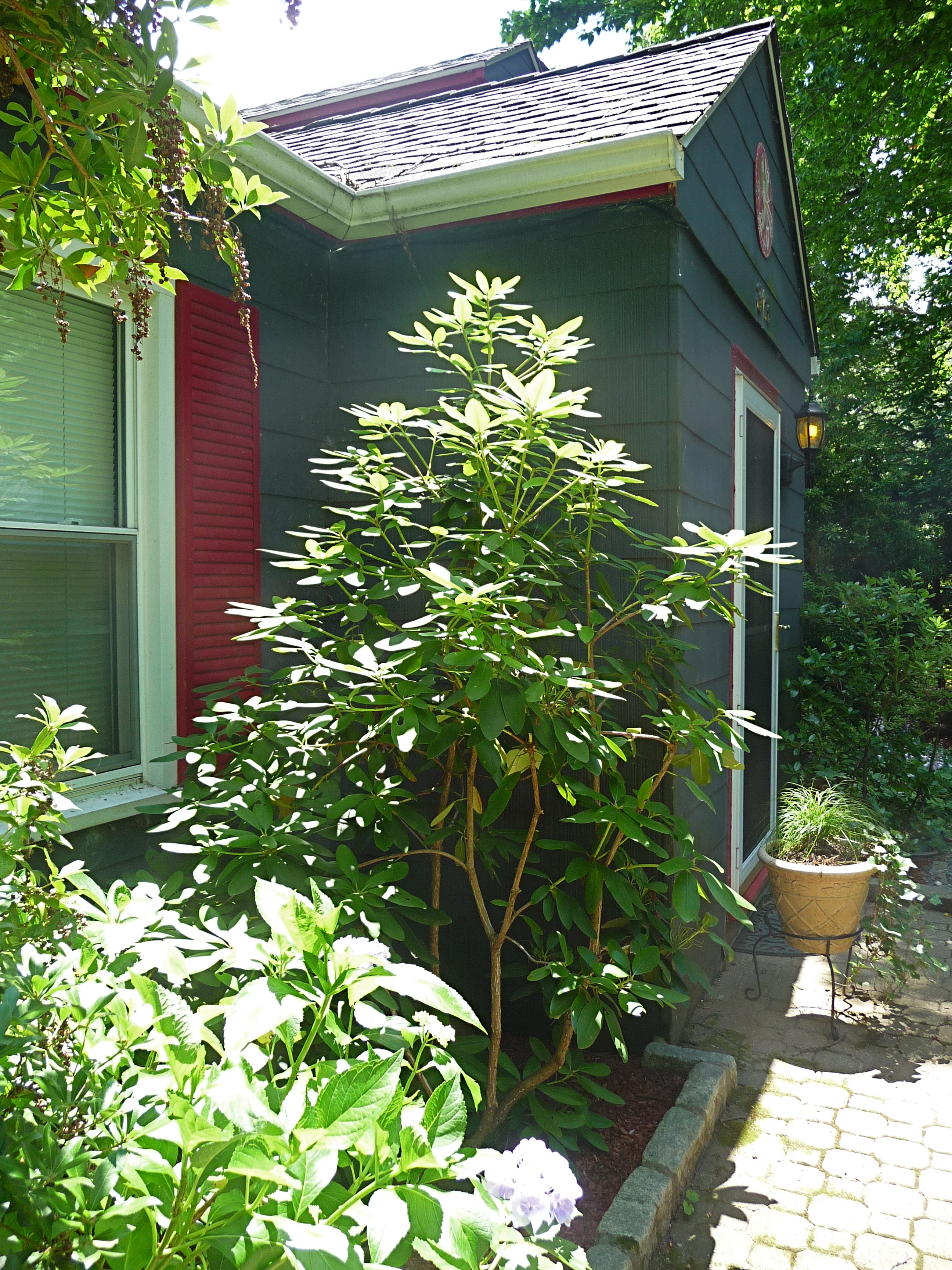
ImageThirteen years ago this week we moved into our lake house. About three years into ownership I decided the house had been a huge mistake. The complaints were long and varied: it was small, there was no place inside for the children to entertain friends, my daughter’s bedroom was on the first floor facing the street, there was no garage, and the yard…well let’s just say we had nicknamed it Satan’s lawn.

That early lawn was actually a combination of crabgrass and plantains posing as grass. The front lawn sits three feet above the front entrance and is held back by an ugly cement block retaining wall. The backyard drops down one hundred and fifty feet to the dock. The lawn mower had to be lifted by two people section by section to keep the weeds at bay. So when we heaved the mower to the lower yard it tended to stay there. Mowers that are left out in the rain don’t last very long.

         “Help me move the mower.”

         “Ask my father.”

          “His back hurts.”

           “So does mine.”

I am not mechanically inclined. My husband thinks he is, which is interesting since we break lawnmowers with reckless abandon.  He explains it this way.

            “Just because someone is mechanically inclined doesn’t mean they understand all machines. I never studied small engines.”

            “Oh.”

We have owned (no exaggeration) nine lawnmowers. We average about one a year. This year we had two repaired. Having two mowers has cut down on the hauling. After thirteen years there are only two small sections of yard remaining that ever get mowed, yet we need two mowers.

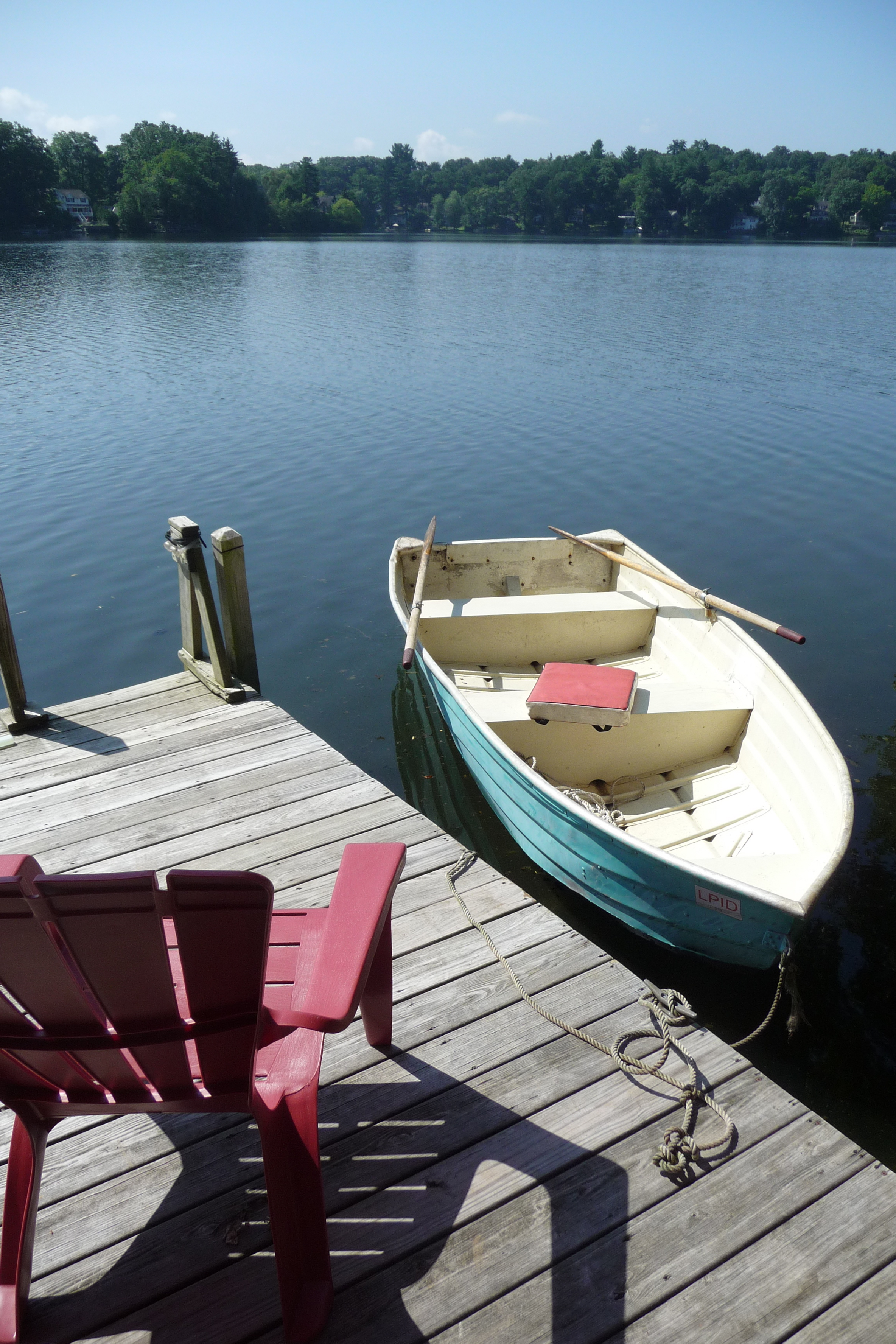
Another big lawn issue is tree maintenance. Several years ago a two hundred year old maple tree silently pulled from the ground and landed in the lake, smashing the docks and rowboat in the process. Nobody heard or saw it fall except a neighbor who came over to inspect the damage.

“Oh, that was what I heard last night,” she said, as we stared fifty feet out into the water searching for the end of the tree.

Numerous tree men were called in to bid on the job.

            “That’s a doozy, alright.”

            “How much?”

            “Well seeing that it’s in the water… and the street is two hundred feet up, I’d say…seven thousand.”

            Next.

            “Have you ever thought about moving?”

The man we hired only charged two thousand dollars and brilliantly used a winch that he ran through other trees, pulling the fallen tree out of the lake by a truck up on the street. Then of course we had to hire two men to chop up the tree into fireplace size logs. We could have a fire every day for a decade and still have wood left over.

One of the early draws of the lake house was that we were planning to throw a lot of parties. I don’t know why we thought this since we never threw many parties before buying the house. For our daughter’s high school graduation she wanted a big party. We invited seventy-five people and needed the use of the whole yard, but the whole yard wasn’t available. A month before the graduation party I sat on the steps in the middle yard and cried.

            “How are were ever going to fix this?” I sobbed, pointing at the remains of a giant, rotten railroad tie sandbox. (That I had to have, eleven years prior.)

            “Don’t worry mama,” my son said. “I’ll fix it.”

            I stared blankly at this twenty-one year old who had feigned illness to get out of any and all yard work for his entire life. “You? How?”

            He shrugged. “This is nothing.”

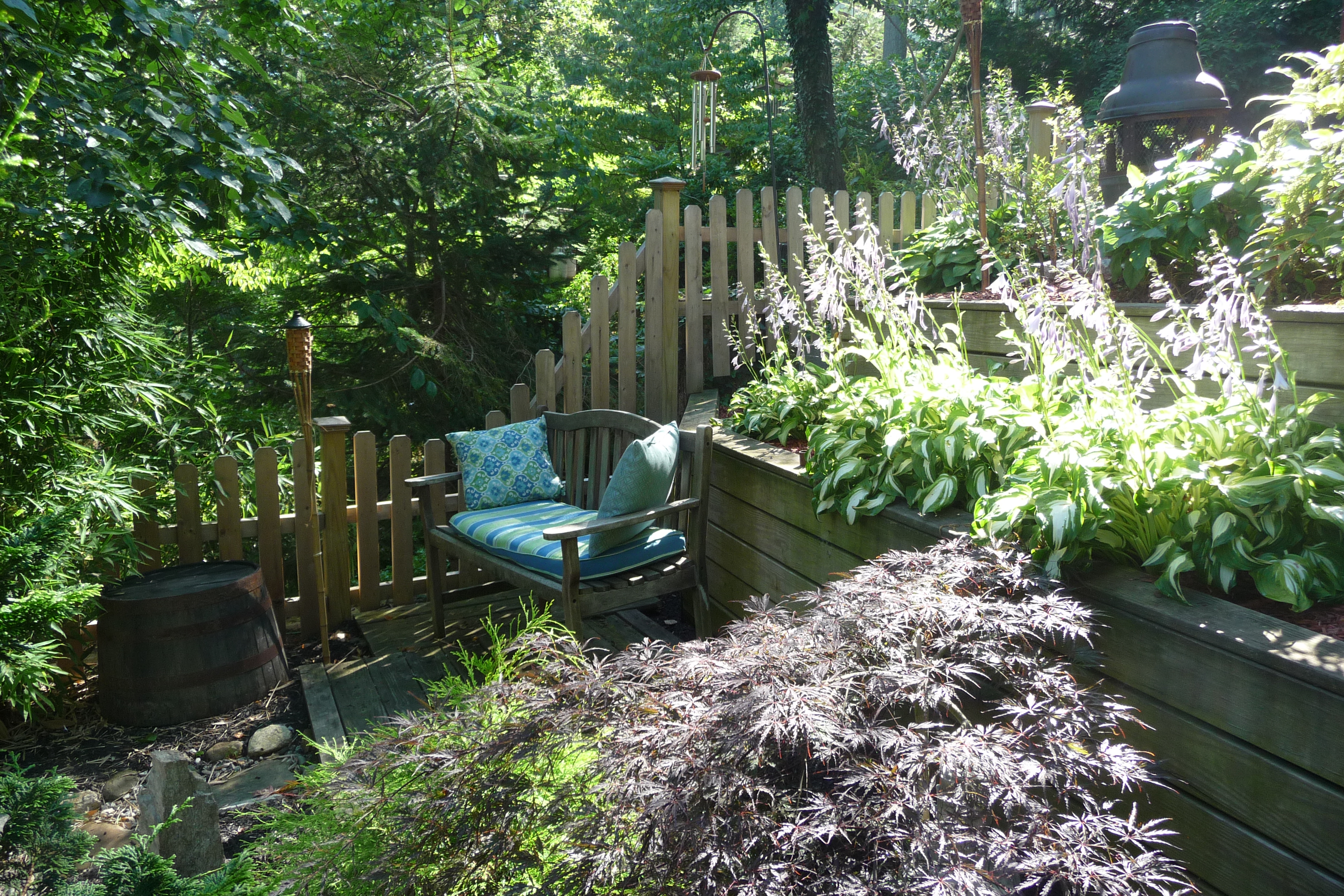
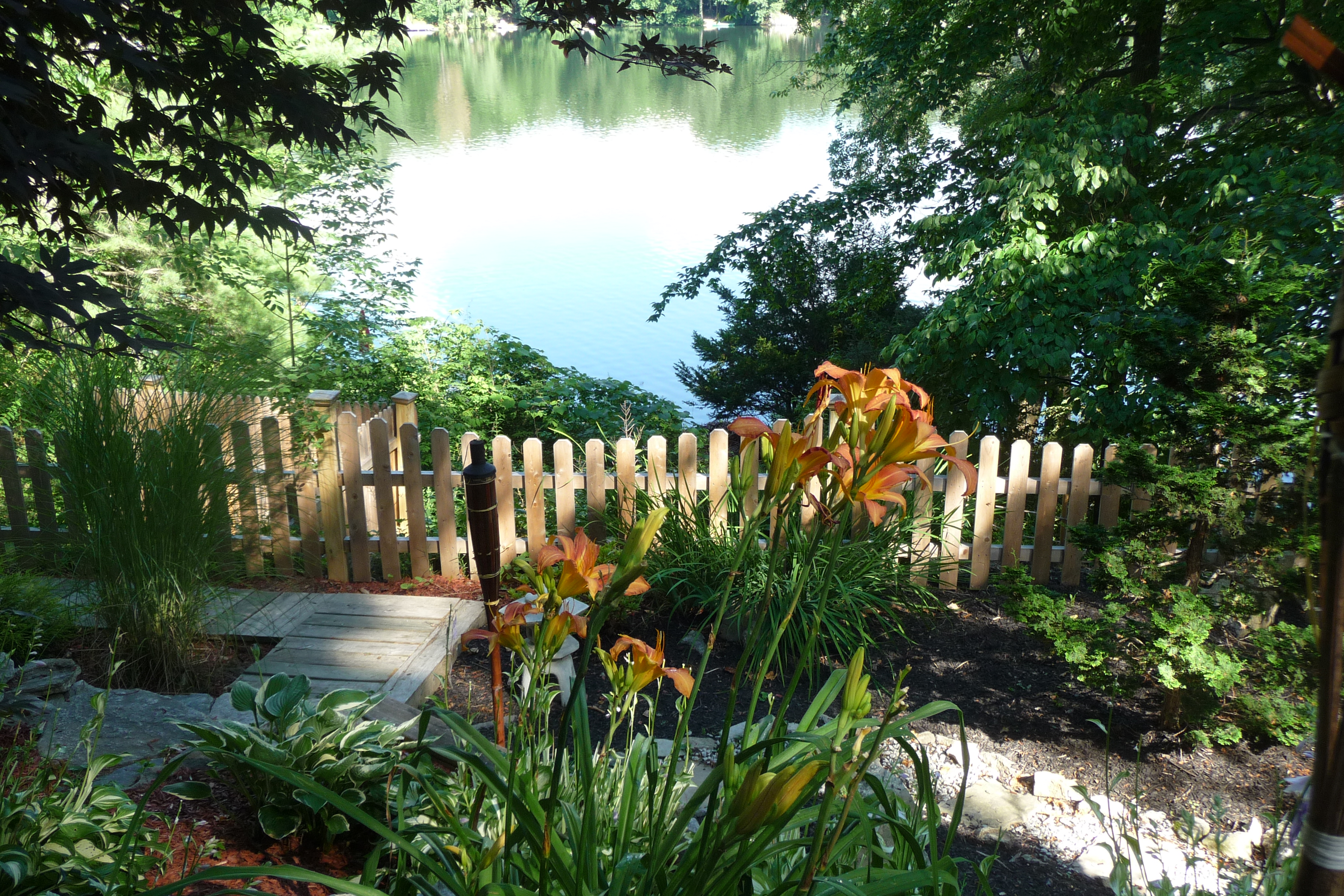
One month and hundreds of dollars in plants and supplies afterward (which included a power saw with a burned out motor) we had a Japanese garden complete with a floating wooden walkway that he built from discarded lumber. Two summers later, I still can’t believe he pulled that off. It proved to me that miracles can happen.ImageImage

            In the years of ownership and with the help of various handy men we have also built tiered garden beds, erected three different types of fences, connected the upper and lower decks with a staircase, installed an interlocking brick walkway and patio, dug a flagstone walkway, erected a stone wall, designed and built a solitary reading deck, rebuilt the dock three times, installed two fountains and an outdoor shower, transplanted dozens of perennials in the hope that one day, the yard would be care free or at the very least easy to maintain. The other hope was that our marriage would last. With every winter season I never know what disaster lurks for the following spring. I don’t know why we stayed but I have only recently stopped wanting to sell it.

.Image

MONARCHS AND THE QUEEN’S BLOOD

Image

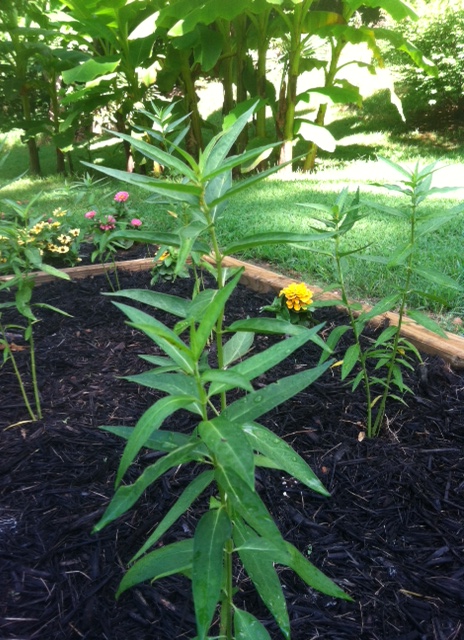
Susan’s Milkweed Bed near Asheville, NC

Recently, my sister Susan who lives in North Carolina, sent me a photograph of her newly planted Milkweed bed. It boasted six young Milkweed plants lined up in two neat rows. She and her husband Tim had sent away for the plants as part of a grassroots effort to help save the Monarch butterflies.

“I became involved in this dilemma after reading the novel The Butterfly’s Daughter last year,” Susan said.

                “Will the Monarchs be able to find your plants?” I asked.

                 “We’ve been told they will. A sort of ‘plant them and they will come’ kind of thing.”

We grew up in a family of six in Northern Illinois. We lived in a split-level home that sat alongside a small, undeveloped stretch of wild prairie. Wildflowers grew in abundance. Each summer produced Bachelor Buttons, Black-Eyed Susans, Thistles, Goldenrod, Queen Anne’s Lace and Milkweed. Monarchs were commonplace. I remember in the early fall we would look out on our yard and see hundreds of Monarchs clinging to the Forsythia bushes. They might stay for a few hours or a day or two before flying away, followed by a few stragglers that came along every few days after the first sighting. I have always known they migrated but never thought much about them or considered where they were heading.

 When we first moved to the lake, thirteen years ago this month, I was out walking with my children and we came across some Queen Anne’s Lace.

“Queen Anne was sewing some lace and she pricked her finger with the needle, causing a single drop of blood to fall onto the lace,” I explained, pointing to the single crimson flower at the center of the white lacy plant.

               “How did she bleed on all of them?” my then six-year-old daughter had asked.

                “It’s just folklore,” I said as I spied some Milkweed. I hadn’t seen any since I moved from the Midwest.

                 “Look at this,” I said, breaking open one of the pods and revealing the soft white substance resting inside. “Seeds.”

              “It feels like silk,” my son said. He pulled the fine threads apart and we watched them float into the wind.

My book club is currently reading Flight Behavior by Barbara Kingsolver. The book is high on scientific information about Monarchs and climate change, which is fed to the reader through human drama. Kingsolver draws heavy parallels between the plight of the Monarch and human choices. It’s unpleasant to read about the world falling apart. Losing the Monarchs is a symptom of those choices.

I actually hadn’t thought about Milkweed since that first time we stumbled upon it, so I set out on my morning walk in search of it. Today, I didn’t find any.  I also only found three Queen Anne’s Lace plants. Three? And the three I did find didn’t even hold the red drop of queen’s blood.

I felt so obtuse that I hadn’t noticed less wildflowers growing around the lake until I read Kingsolver. I called my sister back.

             “I don’t think we have Monarchs here. I’ve never seen any.”

             “If you used to have Milkweed then Monarchs were there,” she said. “Plant some and they’ll come back.” She told me where to order the plants.

When I look out at my lake from the deck, my world seems visually beautiful.  It’s hard to believe from my vista that nature is out of balance, but intellectually I know it is.

It reminds me of the words of the baboon Rafiki from The Lion King.

             “No, look harder.”Image

The truth is I want to find the drop of queen’s blood inside the lace in abundance and I want bright orange Monarchs to pass through my yard and light on a Milkweed plant.

Image

JUNKTIQUES

ImageIn late winter we entered the PBS Antiques Roadshow lottery to gain two passes to the show in August. We spent several months anticipating our win and deciding what to bring.   The trouble is, how do you choose when everything in your small lake house is an heirloom, a collectable, or at the very least valuable?

Contemplating about what was truly valuable forced us to look at what wasn’t: almost everything. I also saw this as an opportunity to clean the house. Whenever I try to throw anything away a family member accosts me.

            “What are you doing?” my husband gasped as I tossed old programs from Broadway shows into the recycling box. “Those are valuable.”

            “Valuable?” I questioned as I flipped through the stack of playbills from bygone performances like Roza, the 1987 show with Georgia Brown that closed practically the day before it opened.

            “What do you think you’re going to get for these?” I asked. But the better question was when are we going to bother to try to sell them, because we certainly were never going to look at them again. I grabbed my laptop and went straight to eBay, typing “Playbill” in the search box.

            Smugly, I said, “You can buy playbills by the lot or singles for around a dollar.”

            “A dollar?” Rob exclaimed. “Let me see that.”

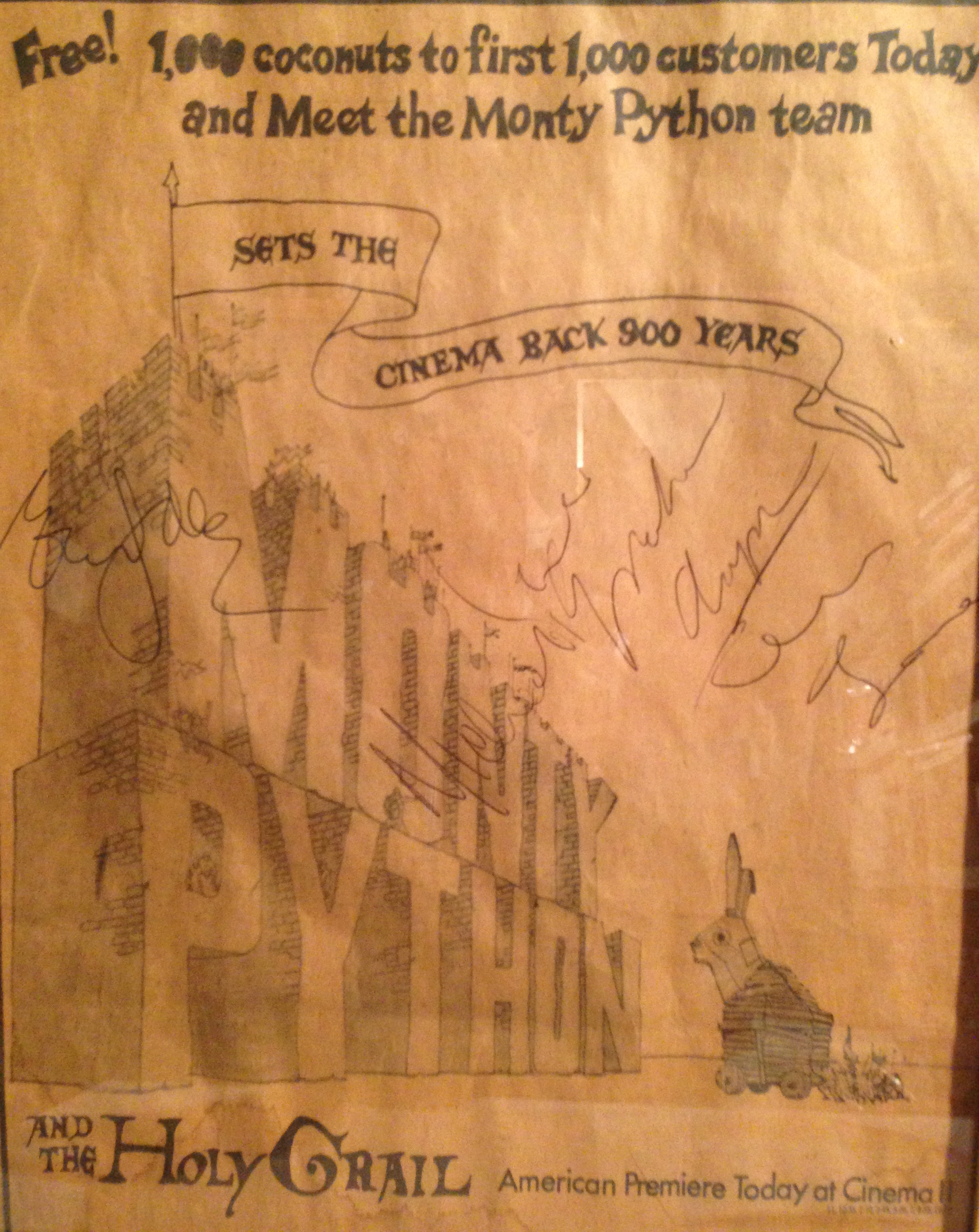
It turns out there are 24,916 results for playbills currently listed on eBay. They range in price from 99 cents to $35.00. The high-end playbills are covered in autographs from famous casts but none of them are selling. They don’t even have bids on them. Apparently everyone wants to unload his or her old programs. This made me question the full-page newspaper ad for the premier of Monty Python’s Holy Grail, complete with cast signatures. But at least Rob hangs this up in his darkroom and appreciates it.  Things in storage tend to stay in storage.Image

 We have a bin in the living room filled with old periodicals that we need for some reason. I recently cleaned it out. It included old New York Times magazines and the Time magazine cover with Shepard Fairey’s portrait of Obama, which turns out is worth around five dollars in mint condition. Our copy was bent and had creased corners.

We have a china cabinet that is stuffed with beautiful figurines and miniature shoes that we culled from a lifetime of junk-collecting by Rob’s parents. A few pieces may sell for thirty or forty dollars, but not many.

We recently headed up to Beacon, New York to check out the antique scene along Main Street. It was more like a smattering of musty, disorganized junk shops sandwiched between a few sparsely occupied restaurants. The best part of looking at someone else’s junk is that it helps you consider your own.

            “Oh, look at this,” Rob said. “My grandfather had one just like it.” He stared at a chrome ashtray sporting two long beaked birds where the smoker sticks his burning cigarette. “It must be worth a lot.” He flipped it over and read. “Six dollars.” He shrugged and placed the dish down. “His was in better condition.”

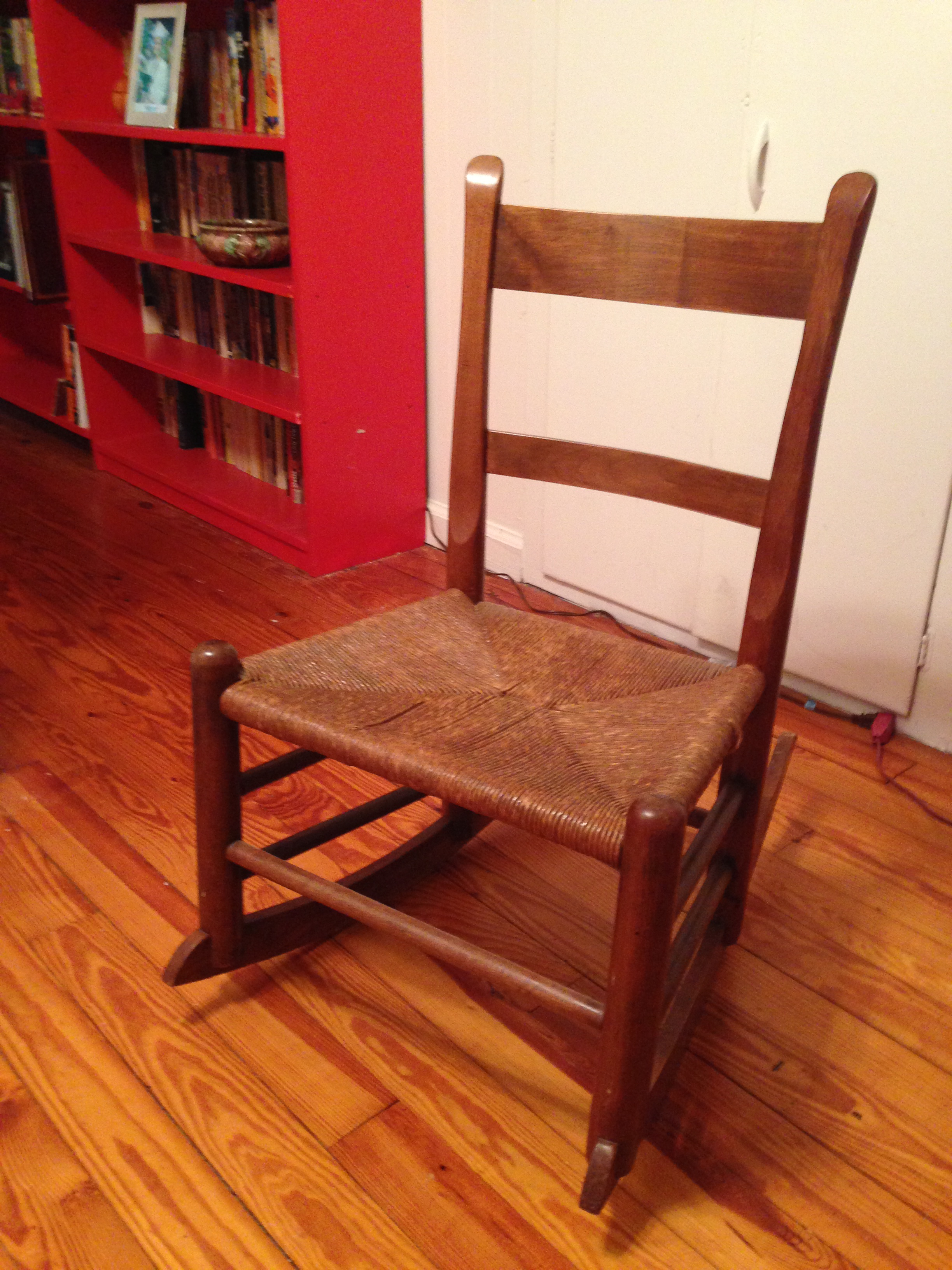
 When my mother and her husband were moving from a four-bedroom house into a condominium they had to get rid of some beautiful pieces of furniture that wouldn’t fit in the apartment. A small wooden rocker with a rush cane seat sat off to the side.  I seized it and spent a lot of money shipping it to New York. The chair is pretty but small and armless and nobody ever sits in it. It moved from room to room in our house and always seemed to be in the way. My son has a large apartment and I offered him the chair in lieu of getting rid of it.

            “No, I don’t want it,” he said.

            “But it’s an antique.”

            “What’s the provenance?” As a budding historian he always wants to know the origins.

            “I’ll check.”

            I called my mother and she remembered buying the chair in Virginia early in my parent’s marriage.

            “You bought it new?”

            “Oh sure. It was a common chair, they made a lot of those.”

So I am faced with these dilemmas: continue to stub my toe on the rocker rungs, donate the chair or lie to my son.

            “It’s been in our family for generations.”

            “Generations?”

            “Yup.”

            “How many?” he asked.

             “Uh, two.”

             He paused. “Including you?”

            “Yes,” I demurred.

Now if the chair belonged to my husband’s family I’d have no problem setting it out curbside.

I think it’s a good thing we didn’t win the Roadshow tickets.Image

DUCK TIME

P1000929

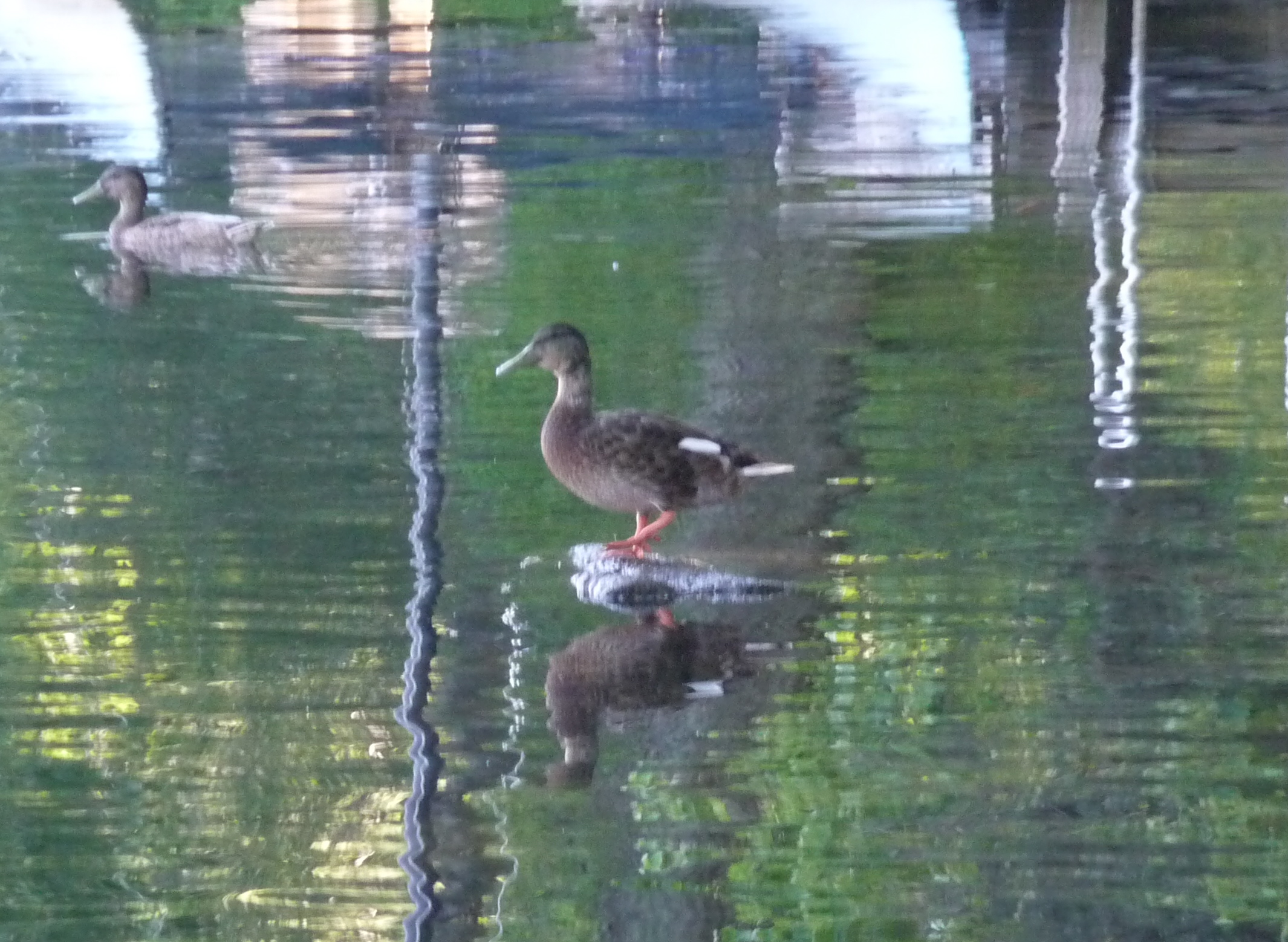
We consider the ducks on the lake to be our friends. They have been stopping off on some rocks near our dock for years. We have enjoyed watching them fish, preen, and socialize before heading out to other ports. Then after hurricane Sandy a large log from a felled tree floated across the lake and hovered near our absent neighbor’s shore all spring. The log became known as the Duck RV, and it allowed us to have an even nicer relationship with the ducks. They met and congregated on the log at various points during the day before settling down in a line for nighttime. The log had become their home. This arrangement worked well until the Duck RV moved again.

Each day the Duck RV inched closer to our dock. It was difficult to swim around because of unseen branches that stretched out from the log beneath the water’s surface. Our swimming water became littered with small downy duck feathers. The stench from the duck feces coating the log was wafting into our air. The Duck RV had to go!

With my husband Rob at the oars and me in the water pushing from the back of the boat, we heaved the log further down the lake and deposited it into a niche of uninhabited lakefront.

But just like humans, ducks are creatures of habit. And that night while eating our supper on the upper deck I looked down at the darkened water and asked, “What is that?”

Dozens of motionless blobs were floating in front of our dock.

“Ducks?” my daughter asked.

Rob peered down. “I think it’s a duck armada.”

I ran to get the binoculars.

“What are they doing?”

“It looks like they’re sleeping,” he said.

“Ducks don’t sleep floating in the water.”

“How do you know?”

“Don’t you remember Make Way For Ducklings?” I said. “When ducks find a home they want to keep it.”

“I think they’re angry,” Rob said.

“They don’t look angry. Some of them have their heads tucked in. ”

Time passed and we grew tired watching the homeless ducks and went to bed. I got up in the night for water and the ducks were still there, waiting. Waiting for something that had once been available and now in an instant wasn’t. At least that’s how it must have felt in duck time. It seemed as if they were holding their ground, moving only as far as the current pushed them along. We cared about the ducks but we just didn’t want to share our small stretch of waterfront with them.

A few days later the ducks had happily discovered their RV’s new home. The sad part is that we can’t watch them anymore. Sort of like our own children going to college and then moving away from home.

BETTER WEATHER

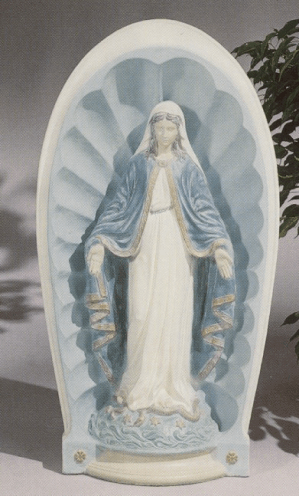
ImageThe people who live around the lake punctuate my daily walks. They are my neighbors but I don’t really know most of them. There’s the man with two squat dogs that bark incessantly as I pass but never leave the edge of the property. The man waves at me and tells the dogs to shut up. There’s the grandmother who picks raspberries where I like to pick and we’re engaged in a mild competition. There’s Milly with the not-too-subtle anti-abortion stickers plastered across her bumper, like Abortion is Murder. Milly has been walking the dog of another neighbor, who I call the troglodyte. He used to only come out of his house early in the morning but now he’s ill and housebound. Milly has one of those baby blue Virgin Mary statues in her yard that seems to comment on the passerby’s as much as the owner does. I feel conflicted about Milly but I still say hello when I see her.

I say hello to everyone except three men who live on the opposite side of the lake. They are always parked outside their shabby house. They sit on folding chairs clustered around a small, cracked plastic table. The yard is mostly brown spots worn bare by their countless shoe rubbings under the table. One of the men wears a Korean silk bomber jacket with a dragon embroidered on the back even if its eighty degrees. So I started referring to them as “the veterans” just as a way of identifying them in conversation.

Initially I pretended to be talking on my phone when I passed by. Then I started to jog staring straight ahead. I thought if I could pass quickly, they wouldn’t notice me. But it felt like their six eyes were trailing me. My daughter found a new route that avoided their house altogether. I started complaining to my son.

“I tried getting up earlier but they’re even out at 6:00 AM smoking cigarettes and drinking tall boys.”

“What do they say to you?”

“Nothing.”

“Nothing? Maybe they’re lonely,” my son suggested.

These men weren’t belligerent or offensive but they made me uncomfortable. I felt like a bad person for ignoring their existence. What was stopping me? Fear? Korea? The Korean War ended five years before I was born and I’ve sort of overlooked it except when I watched M*A*S*H in high school. Unlike the Vietnam War or WWII, I never knew anyone who fought in it or died there. 2013 marks the 60th anniversary of the end of the Korean War, which would make these men at least 78 years old. I don’t think they are that old but the truth is I don’t really know anything about them. I just know what I perceive to be true.

The next day I passed by Milly’s and the blue Virgin Mary smiled at me. I scowled back. I had drawn a line in the sand with myself and now I was determined to cross it. I had helped fuel the animosity my daughter was feeling.

As I approached their house I shortened my gait and turned towards the men.

“Good morning,” I said, waving casually.

The man with the dragon bomber jacket smiled. “Good morning,” he said, waving back.

The following day I said hello and I mentioned the oppressive heat.

“It is hot,” one of the men agreed.

“Damn hot,” another said.

“But better weather is on the way,” the third man said.

“That’s right,” I said, “it is.”

LOST AT SEA

I set a goal at the beginning of the summer to swim across the lake every day. You might think that with all this hot, hot weather, this would prove to be a snap. So far I’ve made it about half the time. Trouble is, too much hot weather makes the lake too warm and it ceases to be inviting. This hasn’t happened since 2002 when slipping into the water really did feel like a bathtub. The good news is that a heavy rain will alter the temperature back to normal levels, and we had rain yesterday and today.

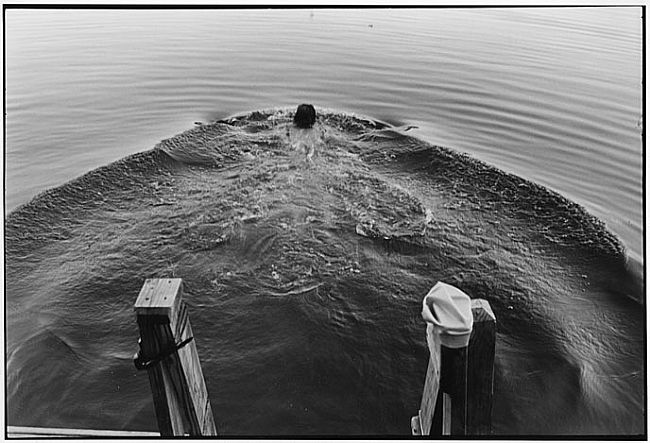
Swimming without a lane across an expanse of water alters your perception of where you are in the universe. You can try counting strokes to measure your progress or you can simply lose yourself in the cadence of the swim. If you fail to look up from time to time you can find yourself far off course. Once you prop your goggles on top of your head and collect your bearings you immediately have to push the distance out of your mind or you’ll drown just thinking about it. If fatigue sets in, which it always does with me on the return trip, you simply flip over on your back and float. My mother taught me this when I was a young, struggling swimmer.

“If you get tired float on your back,” she instructed.

“And do what?”

“Rest.”

“Rest?” I asked. “Rest in the water?”

“Of course.”

It seemed odd. Then I found out almost every swimmer knew this trick. There is absolutely no better way to de-stress. Find a lake, swim to the very middle, flip over on your back and stare up at the clouds.  Keep your hands fluttering occasionally so you don’t sink and then let everything melt away. Try to watch a least one cloud dissolve before you swim back.  You will return a different person. Just setting off from the dock to be alone on the planet will begin to lower your blood pressure.

When my daughter was in the fifth grade and eager to swim across the lake, I agreed on the condition we stop halfway over and float. This had the added bonus of allowing me to take a break from watching her swim.

“What do we think about?” she asked when we arrived near the center and we were treading water in a bicycle motion.

“Nothing.”

“Oh,” she said, seemingly unsatisfied.

“You think about how the earth is supporting you.”

“How nice,” she said.

WRONG DIRECTION

Every morning before breakfast I walk-run around the lake. There are seven hills and the course is two miles. After I pass my house once I switch directions and do it again. It’s amazing what you miss if you only walk in one direction. I was walking with my daughter one morning when I commented on a house we were passing. “They’ve almost finished tearing that house down,” I said.   “What house?” “That one.” I pointed to the charred remains of a burnt bungalow. She gasped in surprise. “I never noticed that before.” “What?” It turns out that if you walk in the opposite direction and you’re not looking for it you just might miss it. But anyone who lived here the night it burned down last February wouldn’t overlook it.  That night we turned off the lights and peered out the picture window, across the ice. There was a lot of smoke and then it exploded becoming engulfed in flames that shot fifty feet into the black sky. Our fascination was soon consumed by an utter horror that the firemen had no hope of saving it. Was everybody okay? Usually we watch houses rise up and mark the progress. Last week, when the outer walls of this house came down I peered into the owner’s bedroom closet. All their smoked filled clothes were exposed to the street but still neatly hanging on a rod and their shoes were lined up on racks like they were waiting for their owners to return. I felt like I was looking at something very private. Today with my daughter, only the fireplace remained. It stood tall with a few wood beams clinging to the blackened stone.  It resembled an ancient ruin left behind by a civilization that owned a lot of stuff they didn’t need. If you lose everything in a fire, what’s the first thing you would buy when you started over? And what would decide to do without this time around?

Every morning before breakfast I walk-run around the lake. There are seven hills and the course is two miles. After I pass my house once I switch directions and do it again. It’s amazing what you miss if you only walk in one direction. I was walking with my daughter one morning when I commented on a house we were passing.
“They’ve almost finished tearing that house down,” I said.
“What house?”
“That one.” I pointed to the charred remains of a burnt bungalow.
She gasped in surprise. “I never noticed that before.”
“What?”
It turns out that if you walk in the opposite direction and you’re not looking for it you just might miss it. But anyone who lived here the night it burned down last February wouldn’t overlook it.
That night we turned off the lights and peered out the picture window, across the ice. There was a lot of smoke and then it exploded becoming engulfed in flames that shot fifty feet into the black sky. Our fascination was soon consumed by an utter horror that the firemen had no hope of saving it. Was everybody okay?
Usually we watch houses rise up and mark the progress. Last week, when the outer walls of this house came down I peered into the owner’s bedroom closet. All their smoked filled clothes were exposed to the street but still neatly hanging on a rod and their shoes were lined up on racks like they were waiting for their owners to return. I felt like I was looking at something very private.
Today with my daughter, only the fireplace remained. It stood tall with a few wood beams clinging to the blackened stone. It resembled an ancient ruin left behind by a civilization that owned a lot of stuff they didn’t need.
“Did anyone die?”
“Just the parrot.”
“Oh.”
If you lose everything in a fire, what’s the first thing you would buy when you started over? And what would you decide to do without this time around?